
How to Verify Hydraulic Baler Machine Capability Before You Order
Hydraulic baler machine capability can be verified before a purchase order is issued, because the figures that decide fit — compression force, adjustable force range, bale dimensions, chamber size, baling capacity, power and voltage — belong to a specific model number rather than to a supplier's general reputation. This article sets out a pre-order verification method: what to request in writing, how to cross-check each figure against the material being baled, and how to convert the same documents into delivery assurance and acceptance criteria.
jewel, the brand of Nantong Jiabao Machinery Co., Ltd., manufactures environmentally friendly, intelligent compression and baling equipment. The company was established in 2006 and the brand has been active since 1995. Its published model data is used throughout this article so that every verification step can be demonstrated with real specifications rather than described in the abstract.
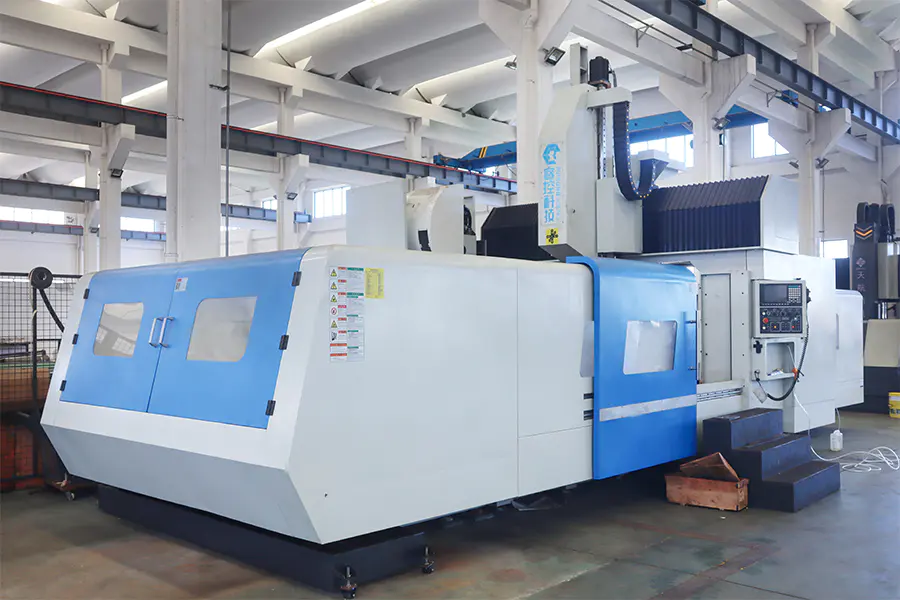
Capability verification begins in the workshop: documented models, documented build, documented capacity.
Why Capability Claims Are Hard to Compare
Most supplier capability statements are not false; they are incomplete. A quotation that describes a machine as a “40-ton baler” does not say whether 40 tons is a fixed figure or the lower end of an adjustable range, what bale size the chamber produces, how much a finished bale weighs, or how many bales the machine completes in an hour. Two suppliers can both quote “40 tons” and supply equipment with different chambers, different bale weights and different discharge behaviour.
The same gap appears on the delivery side. A baling capacity quoted as “6–8 bales per hour” says nothing until it is paired with the documented bale weight, because a 50 kg bale and a 300 kg bale at the same bales-per-hour rate describe two very different material flows. Capacity in tons per hour and capacity in bales per hour are not interchangeable units, yet quotations frequently mix them.
Four gaps account for most of the mismatch between a quotation and an installed machine:
- Force quoted without a range. A model may be configurable well above its base tonnage, so the range matters as much as the headline figure.
- Capacity quoted without bale weight. Bales per hour only becomes a throughput estimate when the bale weight is attached to it.
- Voltage assumed rather than confirmed. Supply voltage is listed as customizable on some models and fixed on others.
- Chamber and bale geometry never checked against the material. A chamber that suits flattened cartons may not accept PET bottles, film or mixed solid waste in the form it arrives.
Each of these gaps is closed by the same document: a model-level data sheet. That is why capability verification and delivery assurance should be treated as one exercise rather than two.
Market Context: Why Documented Data Matters More Than Brand Impressions
Baler demand is measured at several different scopes, and those scopes are not interchangeable. Aggregated commercial research places the global baler market — agricultural and industrial combined — at USD 7.18 billion in 2025, projected to reach USD 7.96 billion in 2026 and USD 18.02 billion by 2034 (Vertex AI Search aggregated market research, published 2026).
Narrower estimates exist for specific segments. The hydraulic waste paper baler segment is estimated at USD 1.45 billion in its base year, with a forecast of USD 2.24 billion by 2032 and a CAGR of 5.5% (Data Insights Reports). The hydraulic metal recycling baler market was valued at USD 913 million in 2023 and forecast to reach USD 1,318 million by 2031 (MarketsGlob).
A note on figures: those three estimates describe different product scopes — total baler market, hydraulic waste paper balers, and hydraulic metal recycling balers. They should not be added together, and none of them should be used to calculate a supplier's market share. Scope discipline is the same discipline buyers are asked to apply to their own specification sheets.
The practical signal for a procurement team is narrower. A commercial marketplace listing for hydraulic baler machines shows multiple manufacturers and product variants competing in the same space, including horizontal hydraulic baler machines and hydraulic scrap metal binding horizontal baler machines (Made-in-China.com listing, accessed 2026). A fragmented supplier base is exactly the environment in which documented, model-level verification outperforms brand-level impressions — a listing confirms that a supplier exists, not that a specific machine will meet a specific throughput requirement.
The Four Data Layers That Prove Capability
A capability check becomes comparable when it is organised into four layers of documented data. Each layer answers a different question, and each can be confirmed from a model data sheet before an order is placed.
Layer 1 — Compression force and its adjustable range
Compression force sets the upper limit of what a machine can densify. The commercially relevant figure is the range, because a model quoted at its base force is often configurable above it. The JPW40F hydraulic baler machine is a semi-automatic horizontal baler documented at a compression force of 40 tons with an adjustable range of 40–100 tons, a bale dimension of 720 × 720 × (500–1300) mm, a feeding mouth of 1000 × 720 mm, a bale weight of 200–400 kg, 11 kW / 15 HP power, a baling capacity of 1–2 tons per hour, continuous push pack discharge, four strapping channels and a machine dimension of 4900 × 1750 × 1950 mm.
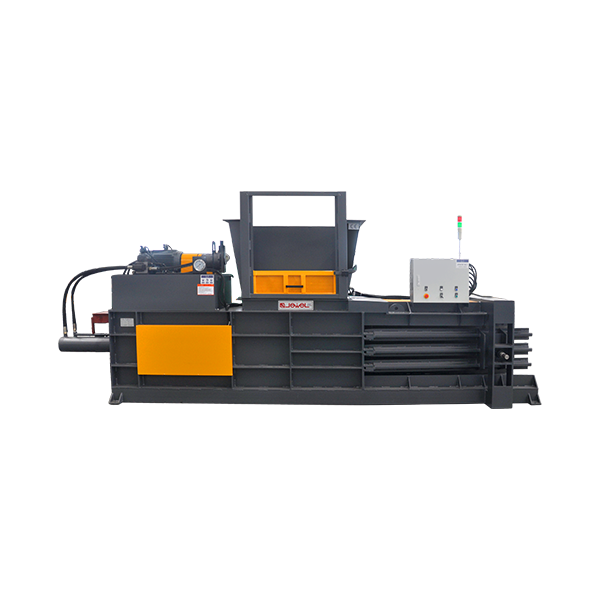
JPW40F semi-automatic horizontal baler: 40 tons within a 40–100 ton range, 1–2 tons per hour, continuous push pack discharge.
The JPW20Q hydraulic baler machine is a fully automatic horizontal baler documented at 20 tons, with a bale dimension of 500 × 500 × 500 mm, a feeding mouth size of 700–460 mm, a bale weight of 30–70 kg, 7.5 kW / 10 Hp power, 2–4 strapping channels, a rated voltage of 380V / 50Hz, a machine dimension of 3400 × 3010 × 2400 mm and a net weight of 2.8 tons. For heavier cutting duty, the JP-S100B is documented in the cutting machine category with a compression force of 100 tons within a 100–160 ton scope, a 1000 mm cutting stroke, a single cycle time of 20–30 seconds, 11 kW / 15 HP power, a machine dimension of 2600 × 650 × 3500 mm and a net weight of 2.6 tons.
Force is also documented as a platform range on some models. The JP7050T8 data sheet lists a 2–180 ton pressure range, and the JPA5076T25X is documented at a 25-ton compression force with a 2–180 ton scope, a bale dimension of 1500 × 760 × 900 mm, a feeding mouth of 1500 × 500 mm, a baling capacity of 3–5 bales per hour, a bale weight of 200–300 kg, 7.5 kW / 10 Hp power and a machine weight of 2100 kg.
The verification rule is that a force range must always be read together with the model's own bale size and bale weight. A wide tonnage range on a small chamber does not describe the same machine as a wide range on a large chamber, and the bale weight is what converts the range into a material flow.
Layer 2 — Bale and chamber geometry
Chamber and bale dimensions decide whether material can enter the machine and whether the finished bale suits downstream handling, transport or resale. A vertical baler and a horizontal baler of similar force can produce very different bales.
The JP-OT100 is a vertical baler with a compression chamber of 1400 × 700 × 1700 mm, a feeding mouth of 1400 × 600 mm, bale dimensions of 1400 × 700 × (700–1100) mm, a bale weight of 400–600 kg, a baling capacity of 5–6 bales per hour, 15 kW / 20 Hp power, a machine weight of 3500 kg and a rated voltage of 380V / 50Hz. For plastic bottle streams, the JPW40BL is documented with a 40-ton compression force across a 40–150 ton scope, bale dimensions of 720 × 720 × (300–1000) mm, a feeding mouth of 1000 × 720 mm, a bale weight of 250–350 kg, 15 kW / 20 Hp power, four strapping channels and a one-time blunder discharge method.
Small-footprint models use a completely different geometry. The JP8060T5X waste compactor is documented with a 5-ton compression force, a bale dimension of 800 × 600 × 400 mm, a bale weight of 50–80 kg, a baling capacity of 4–7 bales per hour, 2.2 kW / 3 Hp power, a feeding mouth of 650 × 470 mm, a machine dimension of 1100 × 1000 × 2150 mm and a machine weight of 550 kg. The verification question is not which geometry is larger, but whether the chamber accepts the material in the form it arrives and produces a bale the site can actually move.
Layer 3 — Baling capacity and discharge method
Capacity is documented in two different units across the range, and mixing them is one of the most common verification errors. Horizontal and metal balers are generally rated in tons per hour: JPW40F at 1–2 tons per hour, the JPY-T60W metal baler at 0.5–1 ton per hour, the JPW-AK100 aluminum foil baler at 0.4–0.8 ton per hour and the JPW-AK60 briquetting machine at 0.2–0.5 ton per hour. Smaller compactors and bagging machines are rated in bales per hour: JP7050T8 and the JPW-K6046 bagging machine at 6–8 bales per hour, JP8060T5X at 4–7 bales per hour, JPA5076T25X at 3–5 bales per hour and JP-OT100 at 5–6 bales per hour.
Discharge method belongs to the same layer because it affects labour and cycle continuity. JPW40F uses continuous push pack discharge, JPW40BL uses one-time blunder discharge, and JPW20Q is a fully automatic horizontal model. A machine with the right tonnage but the wrong discharge behaviour can still create a manual bottleneck at the end of the process, which is why discharge method should be requested as a written field rather than assumed from the machine category.
Layer 4 — Power, voltage, construction and compliance
The final layer is the one most often left to verbal assurance. Voltage is documented as customizable at 380V / 50Hz on JPW20Q, JPW40BL, JP-OT100, JPW-AK60, JPW-AK100, JPA5076T25X and JP8060T5X, while JP7050T8 is documented at 220V / 50Hz.
Power is documented separately and varies widely by model type: 2.2 kW / 3 Hp for JP7050T8, JP8060T5X and JPW-K6046; 7.5 kW / 10 Hp for JPW20Q and JPA5076T25X; 11 kW / 15 HP for JPW40F and JP-S100B; 15 kW / 20 Hp for JP-OT100 and JPW40BL; 18.5 kW / 25 Hp for JPW-AK100; and 22 kW / 30 Hp for JPY-T60W. Construction is documented as carbon steel across the model range, which is relevant for abrasion-heavy material streams rather than as a promotional point.
For regulated markets, compliance should be requested as a certificate number tied to a model. The JPW20Q fully automatic horizontal baler holds CE certificate TTC-22-1609/01/01, complying with standards EN ISO 12100:2010 and EN 60204-1:2018 in line with Directive 2006/42/EC and Directive 2014/35/EU.
A missing field is not a small gap. Where a data sheet does not state a figure — for example a supply voltage on a semi-automatic model, or a bale dimension on a small compactor — the correct conclusion is that the figure is not yet documented, not that the value is acceptable. Request it in writing before comparing offers, and record the answer next to the model number.
A Six-Step Pre-Order Verification Protocol
The protocol below can be run entirely on documents. It produces a comparable file for each supplier and takes the place of verbal assurances that are difficult to enforce after an order is placed.
Step 1 — Request a model-level data sheet, not a product family brochure
A family brochure describes a range. The verification file needs one model number with its compression force, force range, bale dimension, feeding mouth size, bale weight, baling capacity, power, voltage, machine dimension, machine weight and discharge method. Models used as examples in this article — JPW20Q, JPW40F, JPW40BL, JP-OT100, JPY-T60W, JPW-AK60, JPW-AK100, JP7050T8, JP8060T5X, JPA5076T25X and JP-S100B — are documented at that level of detail.
Step 2 — Cross-check force and range against the material
Match the material to the force band and confirm that the quoted figure is adjustable. A 40-ton model documented with a 40–100 ton range, such as JPW40F, and a 20-ton fully automatic model such as JPW20Q sit in different force bands even though both are horizontal balers. Metal and briquetting applications are documented on separate models: the JPY-T60W metal baler at 60 tons with a 60–600 ton scope and a bale cross-section of 430 × 280 × (150–250) mm, and the JPW-AK60 briquetting machine at 60 tons with a 60–200 ton scope and bale dimensions of 300 × 300 × (200–300) mm.
Step 3 — Check chamber and bale geometry against the physical form of the material
Flattened cartons, PET bottles, film, woven bags and metal scrap occupy space differently before compression. Compare the feeding mouth and chamber against the largest piece the line will feed, and compare the finished bale against how it will be stacked, strapped or sold. The JP-OT100, with a chamber of 1400 × 700 × 1700 mm and bales of 400–600 kg, and the JP8060T5X, with bales of 50–80 kg at 800 × 600 × 400 mm, are both valid answers to different handling requirements.
Step 4 — Convert capacity into the unit your site actually measures
Decide internally whether the site is measured in tons per hour or bales per hour, then compare like with like. A 1–2 ton per hour rating on JPW40F and a 6–8 bales per hour rating on JP7050T8 cannot be compared until the second figure is paired with the documented bale weight of 50–80 kg. This step is where most supplier comparisons fail, not because the numbers are wrong but because the units are.
Step 5 — Confirm electrical, footprint and installation inputs
Record the supply voltage, total connected power, machine dimension and machine weight for the specific model. Customizable 380V / 50Hz models and the 220V / 50Hz JP7050T8 require different site preparation. A 2.8-ton JPW20Q, a 2.6-ton JP-S100B and a 550 kg JP8060T5X also impose very different floor and handling requirements, and those inputs should be confirmed before civil and electrical work is scheduled.
Step 6 — Fix acceptance criteria and commercial terms in the order documents
Attach the verified data sheet to the order so that the force range, bale dimensions, voltage, power, discharge method and construction material are contractual rather than descriptive. Add the certificate number for the ordered model, and state the throughput assumption that the site is planning around. A specification sheet as an annex does more for delivery assurance than any delivery promise made verbally.
Delivery Assurance: From Bales per Hour to a Delivery Plan
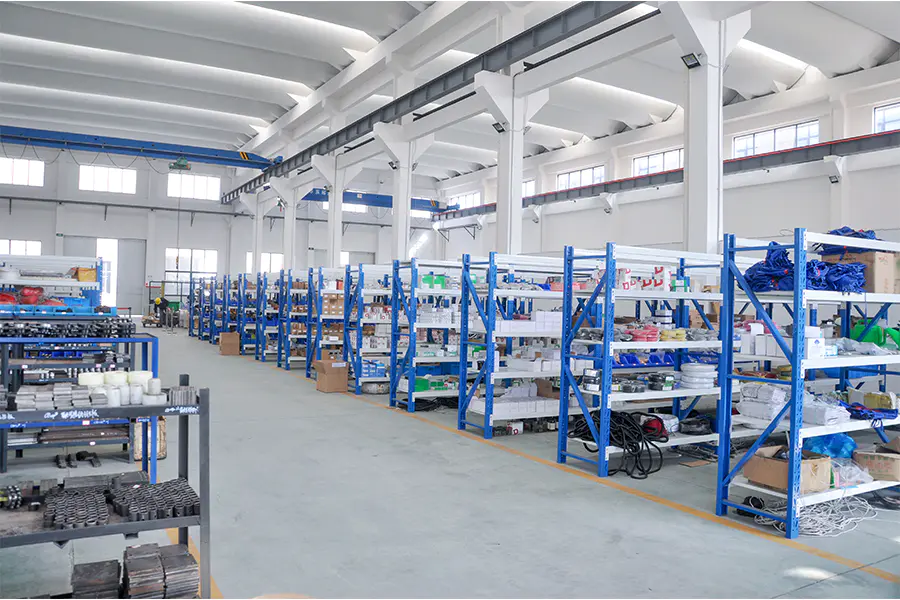
Component and part identification belongs in the verification file, not in a verbal assurance.
Delivery assurance has two parts: whether the supplier can produce and ship the machine, and whether the machine will deliver the throughput the site was planned around. Neither part requires a promise; both can be checked against documented capacity.
Production-side assurance is documented as monthly production capacity and minimum order quantity. For the jewel range, the stated monthly production capacity is 100 units with a minimum order quantity of 1 unit, supported by a 50,000 m² manufacturing facility, a team of approximately 200 staff including a 30-engineer R&D team, and an annual production capacity of 120,000 units. Export business accounts for 70% of total sales, with major markets including Australia, Europe, North America, Africa, Asia, Russia and Belarus.
Throughput-side assurance starts with the bales-per-hour and bale-weight pair. A documented rate of 6–8 bales per hour on JP7050T8 or JPW-K6046, or 4–7 bales per hour on JP8060T5X, becomes a usable delivery plan only when it is read together with the documented bale weight of 50–80 kg. The same logic applies in reverse to ton-per-hour models: a rating of 1–2 tons per hour on JPW40F is only meaningful next to the documented bale weight of 200–400 kg and the bale dimension of 720 × 720 × (500–1300) mm, because bale size determines how the output is stacked, strapped and transported.
The verification step is straightforward: multiply the documented rate by the documented bale weight at both ends of the stated range, write the assumption into the order file, and ask the supplier to confirm it. If the documented bale weight is missing, the delivery plan is not yet verifiable — which is a document problem, not a machine problem.
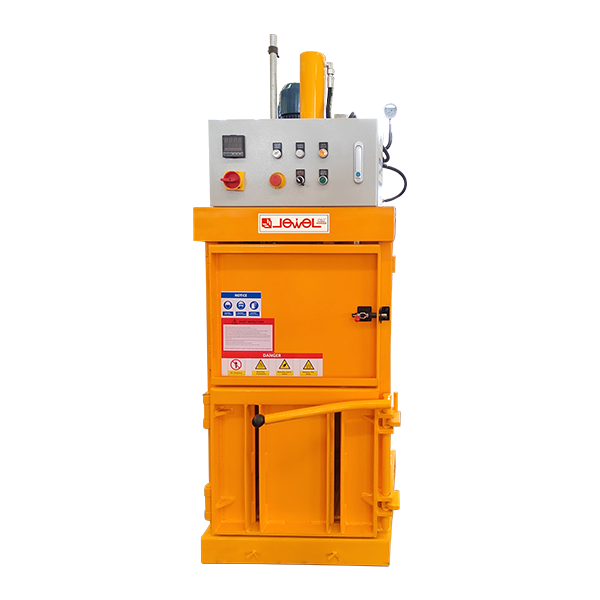
JP7050T8: a 6–8 bales per hour rate becomes a delivery plan only when read with the 50–80 kg bale weight.
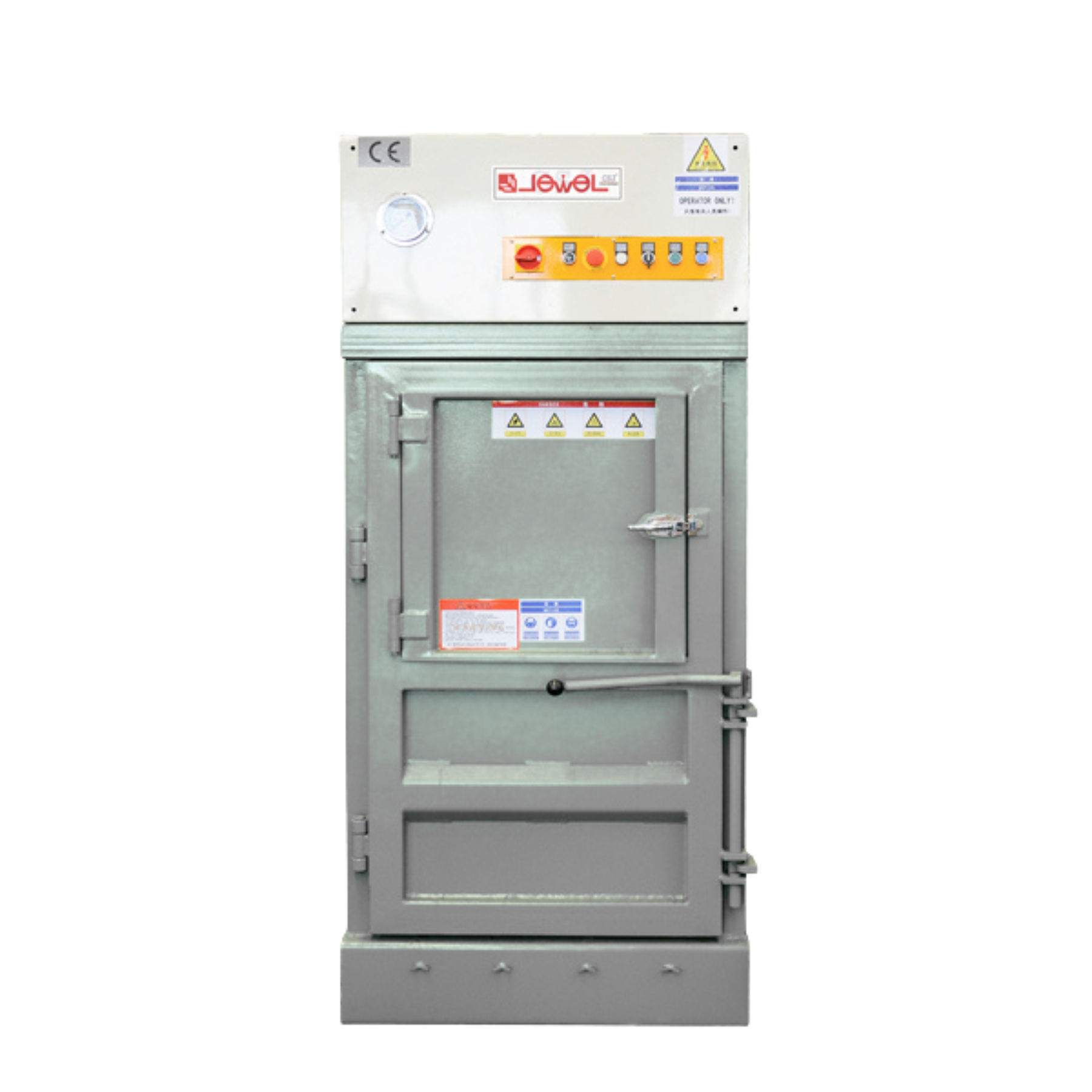
JP8060T5X waste compactor: 4–7 bales per hour, 50–80 kg per bale, 550 kg machine weight.
How This Works in Real Projects
Applied projects show how the same four data layers translate into actual plant decisions, and where a verification file would have answered the question earlier.
- Corrugated carton printing and packaging, Tunisia. A waste discharge workshop environment using JPW20Q in an intelligent automatic waste cardboard recycling and baling line, with a conveying system and factory-wide planning, addressing waste accumulation from the corrugator line and printing machines.
- Corrugated carton printing and packaging, Mexico. JP-OT100 applied in a waste removal workshop for whole-plant integration and high-efficiency automation of multi-type mixed solid waste.
- PET plastic waste processing, Japan. High-density compression of PET bottles with compact, aesthetically pleasing bale shapes in a high-dust environment.
- Packaging and carton manufacturing, Russia. JPW-K6046 used in a full-automatic unmanned waste baling system that collects, compresses and bales carton production waste.
- Comprehensive solid waste recycling, Australia. JPW-AK100 applied in a custom automatic baling system handling mixed plastics, small amounts of glass and metal scraps, with compression stability and durability as the stated requirement.
- Carton manufacturing, Italy. A factory waste disposal upgrade replacing aging balers and adding preprocessing equipment to handle large-sized waste cardboard from production.
- Multi-material recycling, Belarus. One machine processing PET bottles, woven bags, HDPE bottles and cardboard to reduce equipment investment across several waste streams.
Each of these cases begins with the same questions a verification file is designed to answer: what force band, what chamber geometry, what bale weight and what throughput unit. Where the answers are documented, the specification can be confirmed before fabrication; where they are not, the risk moves to the installation phase.
Model Comparison by Documented Specification
The table below compares models on the figures that a pre-order verification file should contain. A dash means the figure is not documented in the available model data and should be requested in writing.
| Model | Type | Compression force | Bale dimension (mm) | Bale weight | Baling capacity | Power | Discharge |
|---|---|---|---|---|---|---|---|
| JP7050T8 | Baling machine | 2–180 ton pressure range | — | 50–80 kg | 6–8 bales/hr | 2.2 kW / 3 Hp | — |
| JP8060T5X | Waste compactor | 5 ton | 800 × 600 × 400 | 50–80 kg | 4–7 bales/hr | 2.2 kW / 3 Hp | — |
| JPW-K6046 | Bagging machine | 10 ton | — | 50–80 kg | 6–8 bales/hr | 2.2 kW / 3 Hp | — |
| JPW20Q | Fully automatic horizontal | 20 ton | 500 × 500 × 500 | 30–70 kg | — | 7.5 kW / 10 Hp | Fully automatic |
| JPA5076T25X | Hydraulic baler | 25 ton (2–180 ton scope) | 1500 × 760 × 900 | 200–300 kg | 3–5 bales/hr | 7.5 kW / 10 Hp | — |
| JPW40F | Semi-automatic horizontal | 40 ton (40–100 ton range) | 720 × 720 × (500–1300) | 200–400 kg | 1–2 ton/hr | 11 kW / 15 HP | Continuous push pack |
| JPW40BL | Plastic bottle recycling machine | 40 ton (40–150 ton scope) | 720 × 720 × (300–1000) | 250–350 kg | — | 15 kW / 20 Hp | One-time blunder |
| JP-OT100 | Vertical baler | 100 ton | 1400 × 700 × (700–1100) | 400–600 kg | 5–6 bales/hr | 15 kW / 20 Hp | — |
| JP-S100B | Cutting machine | 100 ton (100–160 ton scope) | — | — | — (20–30 s cycle) | 11 kW / 15 HP | — |
| JPW-AK100 | Aluminum foil baler | 100 ton | 320 × 320 × (200–250) | 5–15 kg | 0.4–0.8 ton/hr | 18.5 kW / 25 Hp | — |
| JPW-AK60 | Briquetting machine | 60 ton (60–200 ton scope) | 300 × 300 × (200–300) | 5–10 kg | 0.2–0.5 ton/hr | 15 kW / 20 Hp | — |
| JPY-T60W | Metal baler | 60 ton (60–600 ton scope) | 430 × 280 × (150–250) | 15–20 kg | 0.5–1 ton/hr | 22 kW / 30 Hp | — |
Two patterns are visible in the table. First, tonnage alone does not predict throughput: a 100-ton vertical baler is documented at 5–6 bales per hour while a 60-ton metal baler is documented at 0.5–1 ton per hour, because bale weight and material differ. Second, many models document a narrow operating figure alongside a much wider scope, which is precisely the distinction that a verbal quotation tends to blur.
Acceptance Criteria and Commercial Terms
Once the data sheet is verified, the same figures become acceptance criteria. The items below can be confirmed without any price discussion, and they establish whether the machine being quoted is the machine that was specified.
- Certificate tied to the model. Request the certificate number and standards for the exact model, for example CE certificate TTC-22-1609/01/01 on JPW20Q, complying with EN ISO 12100:2010 and EN 60204-1:2018 in line with Directive 2006/42/EC and Directive 2014/35/EU.
- Specification sheet annexed to the order. Force range, bale dimension, feeding mouth size, bale weight, discharge method and power should appear as contractual fields, not as brochure text.
- Voltage confirmed for the destination. 380V / 50Hz with customization stated where the model allows it, or 220V / 50Hz as documented on JP7050T8.
- Construction confirmed. Carbon steel construction recorded for the ordered unit.
- Quantity and capacity terms. Minimum order quantity of 1 unit and a stated monthly production capacity of 100 units for the jewel range.
- Throughput assumption documented. The rate unit, the bale weight used in the calculation and the operating hours assumed per shift.
None of these steps requires price information, and none of them replaces it. They do, however, make a later commercial comparison meaningful, because two quotations can only be compared when both describe the same machine configuration.
Frequently Asked Questions
Which compliance documents should be verified for a hydraulic baler machine?
Request a certificate number that names the model, not a general statement of conformity. The JPW20Q fully automatic horizontal baler holds CE certificate TTC-22-1609/01/01, complying with EN ISO 12100:2010 and EN 60204-1:2018 in line with Directive 2006/42/EC and Directive 2014/35/EU. Because the certificate is tied to a model, a certificate covering a different model in the same range does not verify the machine being ordered, and the document should be requested for the specific configuration on the purchase order.
What force and capacity data should prove that a supplier can build the machine I need?
Documented compression force with its adjustable range, bale dimensions, bale weight, baling capacity and power. In the jewel range, JPW40F is documented at 40 tons within a 40–100 ton range, with a bale dimension of 720 × 720 × (500–1300) mm, a bale weight of 200–400 kg, 1–2 tons per hour and 11 kW / 15 HP. JPW20Q is documented as a fully automatic horizontal baler at 20 tons with a 500 × 500 × 500 mm bale and a 30–70 kg bale weight. JP-S100B is documented in the cutting machine category at 100 tons within a 100–160 ton scope with a 20–30 second single cycle. If any of these figures is missing from a quotation, the capability claim is not yet verified.
Which commercial terms can be confirmed before price negotiation?
Minimum order quantity and production capacity can be documented without price information. For the jewel range, the stated minimum order quantity is 1 unit and monthly production capacity is 100 units, supported by a 50,000 m² manufacturing facility, approximately 200 staff including a 30-engineer R&D team, and an annual production capacity of 120,000 units. These figures indicate whether a supplier can accept a single-unit order and whether the production base can absorb repeat or multi-unit orders later. Because configuration variables such as force range, bale dimension and voltage differ between models, a comparable quotation requires the specification list to be fixed before price is discussed.
Can a single unit be ordered for validation before a larger commitment?
The stated minimum order quantity for the jewel range is 1 unit, so a single-machine order sits within the documented commercial terms. A validation unit is only useful if the specification it is built to is written down in advance — force range, bale dimension, feeding mouth, voltage, power and discharge method. Documented configurations include a customizable 380V / 50Hz supply on JPW20Q, JPW40BL, JP-OT100, JPW-AK60, JPW-AK100, JPA5076T25X and JP8060T5X, a 220V / 50Hz supply on JP7050T8, and carbon steel construction across the model range.
How is delivery assurance verified before an order is placed?
Two documented inputs are used: production capacity and machine throughput. The stated monthly production capacity is 100 units against a minimum order quantity of 1 unit, and throughput is documented per model — 6–8 bales per hour on JP7050T8 and JPW-K6046, 4–7 bales per hour on JP8060T5X, and 1–2 tons per hour on JPW40F. Throughput should always be read together with the documented bale weight before a delivery plan is fixed. The complete specification set, including customizable voltage and chamber or bale dimensions, is compiled in the downloadable catalog, and model-specific confirmation can be requested directly by email at jiabao@csj-baler.com or by phone and WhatsApp at +86 187-2181-4932.
Conclusion: Verify the Model, Then Place the Order
Supplier evaluation for hydraulic baler machines comes down to two documents: a model-level specification sheet and a written record of commercial and delivery terms. Compression force with its adjustable range, bale and chamber geometry, baling capacity in the correct unit, power and voltage, construction material and a certificate number tied to the model are the fields that decide whether a machine will fit a waste stream. Read together with documented bale weight, the same figures produce a delivery plan that can be checked rather than promised.
For the jewel range, the verified inputs include JPW20Q at 20 tons fully automatic with CE certificate TTC-22-1609/01/01, JPW40F at 40 tons within a 40–100 ton range and 1–2 tons per hour, JP-S100B at 100 tons in the cutting machine category, JP7050T8 and JPW-K6046 at 6–8 bales per hour, JP8060T5X at 4–7 bales per hour, and JP-OT100 with a 1400 × 700 × 1700 mm compression chamber — all in carbon steel, with customizable voltage on the models where it is documented.
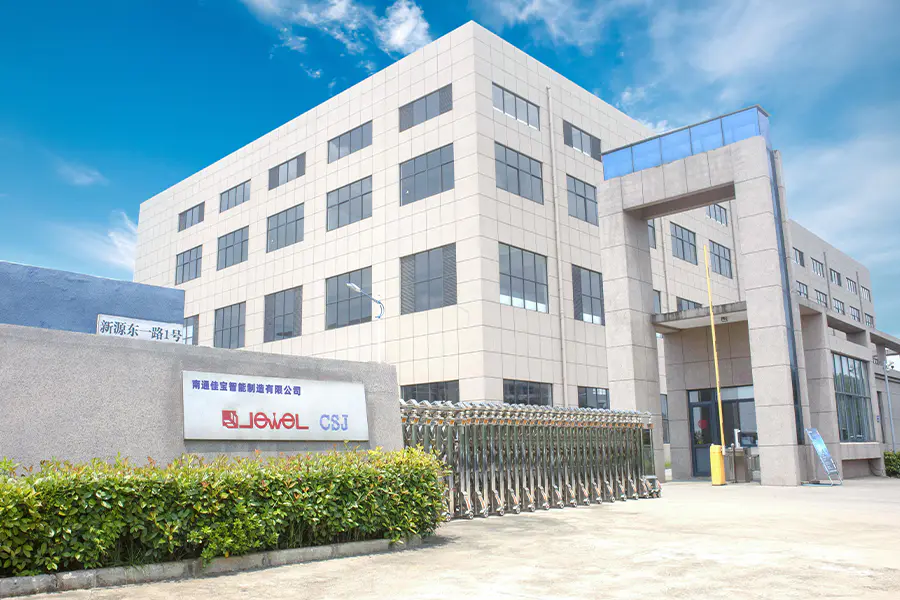
Documented production capacity of 100 units per month against a minimum order quantity of 1 unit.
Next Step: Request the Specification File
Procurement teams can request a model-level specification set, including compression force ranges, bale and chamber dimensions, baling capacity, power, customizable voltage options and certificate documentation for the specific model under evaluation.
Download the catalog: jewel baler machine catalog (PDF)
Website: www.jewelbaler.com | Email: jiabao@csj-baler.com | Tel / WhatsApp: +86 187-2181-4932
Company: Nantong Jiabao Machinery Co., Ltd., No.1 Xinyuan East 1st Road, Rugao City, Jiangsu Province, China.
Have Questions or Need More Details?
Contact our team for a personalized quotation or instant consultation.
Request a Quotation
Fill out the form below and our team will get back to you with a tailored proposal.
WhatsApp Direct Chat
Prefer to chat in real-time? Message us on WhatsApp for instant assistance & quick answers.
- Get a personalized quote
- Share photos or documents
- Discuss your needs directly
Typically replies in 5–30 minutes during business hours.