
Supplier Evaluation for Hydraulic Baler Machines: Verifying Capability and Securing Delivery
A hydraulic baler machine supplier should be assessed on three verifiable points before an order is placed: whether it can build a machine matched to the material your plant actually handles, whether it can deliver that machine on the date it committed to, and whether it can support that machine for the life of the project. Brochures, model counts and marketplace listings answer none of those three questions.
This guide is written for importers, recyclers, carton plants and plant engineers at the research and evaluation stage of buying a hydraulic baler machine. It explains what capability verification means in this equipment category, gives a step-by-step evaluation sequence, sets out the specification data a supplier should be able to produce on request, and closes with a model comparison table, a verification checklist and the documentation to demand before signing.
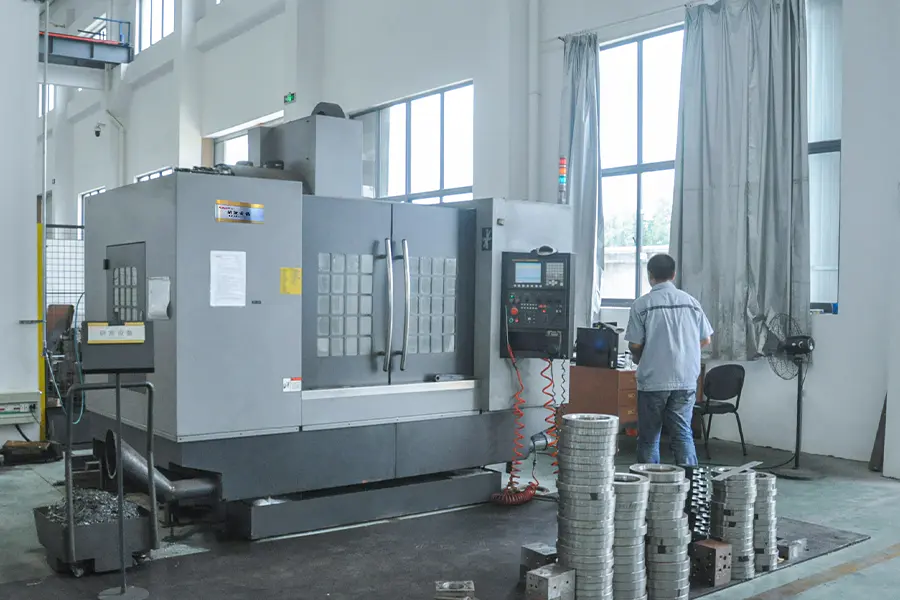
Cover — hydraulic baler machine production workshop. Capability verification starts on the shop floor, not in the quotation.
Why Hydraulic Baler Machine Supplier Evaluation Fails
Most underperforming baler projects are not the result of poor fabrication. They are the result of a machine being evaluated against a price sheet instead of against a plant. Two failure patterns account for a large share of the problem.
Failure pattern 1 — specification mismatch
Materials that look similar on a waste audit behave differently under a compression ram. A recycling operation handling PET bottles, woven bags, HDPE bottles and cardboard has to solve bulkiness and compression resistance at the same time; a mixed-material project in Belarus required an optimized compression configuration before those streams could be converted into regular, transportable bales (case record, 2 years in operation). The same logic runs through other streams. A carton plant producing large, lightweight corrugated offcuts needs a wide feeding mouth and a tall bale chamber, while a PET recycler needs high compression density and a compact, presentable bale (case record, Japan, 2 years). Compression force, feeding mouth size, bale chamber geometry, strapping channels, bale weight and discharge method all have to line up with both the incoming material and the downstream handling equipment.
Failure pattern 2 — delivery and support risk
Lead time, commissioning, spare parts and on-site response are frequently agreed verbally and written loosely. The exposure is larger than it appears. When a baler is integrated into a corrugator line or a sorting line through a conveying system, an unsupported machine does not simply run more slowly — it interrupts the waste flow inside the plant. An automatic waste discharge system only performs as designed when the supplier's delivery, commissioning and service commitments hold.
Evaluation usually happens too late
By the time quotations are placed side by side, the specification has normally been fixed by the buyer rather than validated by the supplier. Capability verification has to happen earlier, because its outcome decides which suppliers are even able to execute the project.
Widening Demand and Why Supplier Scope Now Matters
Baler demand is expanding on both the recycling and the manufacturing side of the market. Market research published in 2026 values the global baler market — a figure covering agricultural as well as industrial balers — at USD 7.18 billion in 2025, projected at USD 7.96 billion in 2026 and USD 18.02 billion by 2034. Within that total, the hydraulic waste paper baler segment was estimated at USD 1.45 billion in its 2024 base year and is forecast at USD 2.24 billion by 2032, equivalent to a 5.5% CAGR over the period. A separate estimate puts the hydraulic metal recycling baler market at USD 913 million in 2023, rising to USD 1,318 million by 2031.
These three figures describe different product scopes — all balers, hydraulic waste paper balers, and hydraulic metal recycling balers — and should not be combined or added together. Their value to a buyer is directional: demand for hydraulic compression equipment is rising in both paper-based and metal streams, which means suppliers are being asked to support a wider range of project types at the same time.
A working hydraulic baler machine range now spans vertical balers, semi-automatic horizontal balers, fully automatic horizontal balers, metal balers, briquetting machines, bagging machines, aluminium foil balers, cutting machines and waste compactors — from a 5 Ton waste compactor up to a 150 Ton fully automatic horizontal model. The evaluation question is therefore not only whether a supplier builds good machines, but whether it can configure the right one for a specific stream and deliver it on schedule.
Capability Verification: Five Pillars That Carry the Project Risk
Capability verification is the part of supplier evaluation that can be evidenced with documents and numbers rather than impressions. For a hydraulic baler machine project, five pillars carry most of the risk.
Pillar 1 — Production capability
Nantong Jiabao Machinery Co., Ltd. is the manufacturer behind the Jewel baler brand; the company was established in 2006, with the brand dating to 1995. It operates a 50,000 m² production facility with more than 200 staff, including a 30-engineer R&D team, and states a monthly production capacity of 100 hydraulic baler units. Its stated main markets include Europe, North America, Australia, Africa, Asia, Russia and Belarus.
For a buyer, the useful question is not the headline capacity figure but whether capacity is available in the window you need. Ask which production slot your order would occupy, and require that answer in writing alongside the lead time.
Pillar 2 — Customization capability
Customization in this category operates on three distinct layers: structure, process and performance. Structure covers chamber size, feeding mouth and discharge method; process covers integration with conveying and sorting lines; performance covers force rating, cycle time and baling capacity. A supplier that confirms customization across all three layers is a different proposition from one that only offers a voltage change.
Voltage is one practical indicator. Several models are supplied with customizable voltage — 380V/50Hz on the JPW20Q, JPW40F, JPW40BL, JP-OT100 and JPW-AK100, and 220V/50Hz on the JP7050T8 — which matters in markets that do not use the standard European supply.
Pillar 3 — Quality control and testing
A 100% test regime is the minimum acceptable statement, and it should be followed by a specific question: which parameters are measured, and is the test documented per unit? Compression force, bale formation, strapping sequence, discharge cycle and control-panel behaviour are the parameters that decide whether a machine works on arrival.
Pillar 4 — Certification and market access
Certification should be verified by number and by harmonized standard, not by the presence of a logo. The fully automatic horizontal baler model JPW20Q holds CE certificate TTC-22-1609/01/01, complying with EN ISO 12100:2010 and EN 60204-1:2018 under CE directives 2006/42/EC and 2014/35/EU. That is the level of detail a compliance file should contain: certificate number, harmonized standards, directive and issue date.
Pillar 5 — Delivery and after-sales assurance
The commercial commitments that protect a project are the ones written into the order: a stated lead time, a stated minimum order quantity, a stated technical response window and a stated on-site attendance time. Jewel's published commitments are a 60-day lead time, a minimum order quantity of 1 unit, 7×24h technical response with on-site attendance within 48 hours, and lifelong maintenance with free operator training.
The minimum order quantity of 1 unit matters more than it first appears. It means a project can be validated with a single machine before any volume commitment is made.
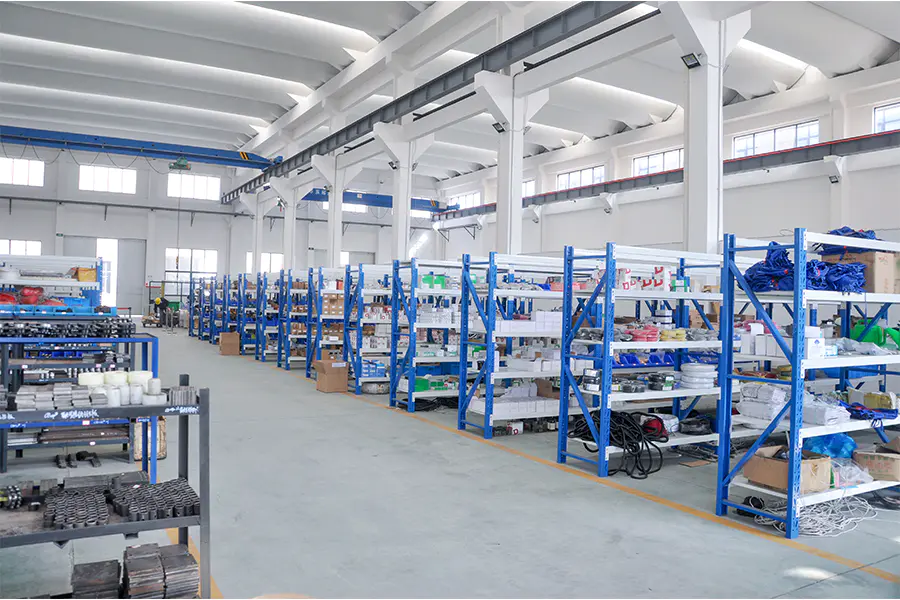
Parts library — the parts position behind a quotation is part of capability verification, not an afterthought.
A Six-Step Supplier Verification Sequence
The following sequence can be run in order, and each step produces a document that belongs in the purchasing file.
- Define the waste stream and the throughput target. List every material by type rather than by category: waste paper, carton, PET bottles, HDPE, woven bags, film, textile, aluminium foil, paper dust and metal scrap. Confirm whether the stream is single-material or mixed, and whether contamination is present — as in a mixed solid waste project in Australia that had to process plastics alongside small amounts of glass and metal scrap.
- Match the machine family to the stream. Vertical balers suit constrained floor space and moderate volumes; semi-automatic horizontal balers suit continuous carton and paper waste; fully automatic horizontal balers suit integrated, low-labour lines; metal balers, briquetting machines, bagging machines, aluminium foil balers and waste compactors address narrower streams.
- Verify the specification against the bid, line by line. Compression force, bale dimension, feeding mouth size, baling capacity, number of strapping channels, bale weight, power rating and machine weight. These are the numbers that make competing quotations comparable.
- Verify production and delivery capacity. Facility size, headcount, engineering team, monthly output and the confirmed lead time for your configuration.
- Verify certification and market access. Certificate number, harmonized standards, directive, and the voltage configuration for the destination market.
- Verify service and parts. Response window, on-site attendance time, training, maintenance scope, and the availability of consumables and wear parts.
What Verified Projects Look Like
The most reliable evidence of supplier capability is a record of projects where the machine had to be configured rather than picked from a list. The following outcomes come from project and case records covering seven installations.
Carton and packaging plants
In Tunisia, a corrugated carton plant needed a factory-wide automatic waste discharge system to clear waste from the corrugator line and printing machines and to improve the overall workshop environment; the configuration referenced the JPW20Q fully automatic horizontal baler, and a related carton-box project eliminated workshop waste-paper accumulation over three years of operation. In Russia, one carton project was built around a full-automatic unmanned waste baling system using the JPW-K6046 bagging machine with automatic operation and a conveying system; a separate Russian carton-box project reported an unmanned waste processing system centred on the JPW40F semi-automatic horizontal baler, reducing labour and management costs over three years. In Italy, a carton manufacturer replaced ageing balers and added preprocessing equipment to handle large-sized waste cardboard with the JPA5076T25X hydraulic baler; waste treatment efficiency improved substantially over four years of operation.
Plastic and PET recycling
In Japan, a PET recycling enterprise required higher compression density and compact, presentable bales; the project referenced the JPW20Q fully automatic horizontal baler alongside other listed models, and the improved bale quality raised both storage and transport efficiency over two years. In Belarus, a renewable-resource recycler handling mixed plastics, film and waste paper from supermarket chains needed one machine to process PET bottles, woven bags, HDPE bottles and cardboard; the configuration resolved the bulkiness and compression difficulty of those materials, and the regular-shaped finished bales improved transport and storage efficiency.
Mixed and multi-material streams
In Australia, a solid waste recycler processing mixed plastics with small amounts of glass and metal scrap ran a custom automatic baling system based on the JPW-AK100 aluminium foil baler, achieving full-line unmanned operation with reduced labour cost and operational risk over two years. In Mexico, a carton plant required a reliable full-automatic waste removal system that could integrate with existing production lines for real-time waste processing, using the JP-OT100 vertical baler; workshop space utilisation and overall plant image improved within the first year. In Tunisia, a carton-box project using the JPW-AK60 briquetting machine eliminated waste-paper accumulation and created a cleaner production environment across three years.
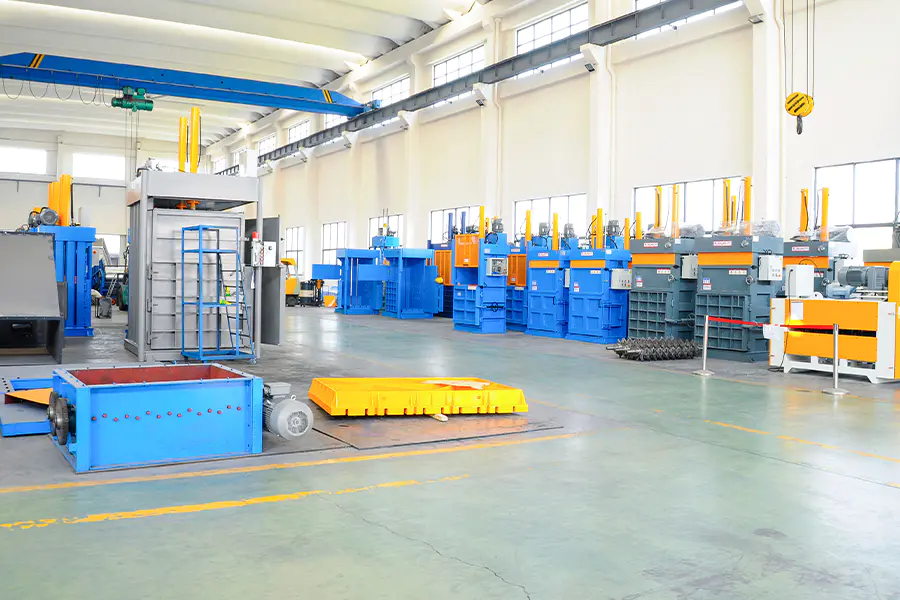
Assembly workshop — verified capacity and testing claims should be traceable to a real production line.
Hydraulic Baler Machine Model Comparison Table
The table below lists published specifications for the main models in the Jewel hydraulic baler machine range. Its purpose is to make supplier quotations comparable rather than to recommend a single model: the correct configuration depends on the material, the throughput target and the available floor space.
| Model | Machine type | Compression force | Bale dimension (mm) | Bale weight | Baling capacity | Power |
|---|---|---|---|---|---|---|
| JPW20Q | Fully automatic horizontal baler | 20 Ton | 500 × 500 × 500 | 30–70 kg | — | 7.5 kW / 10 Hp |
| JPW40F | Semi-automatic horizontal baler | 40 Ton | 720 × 720 × (500–1300) | 200–400 kg | 1–2 Ton/hr | 11 kW / 15 Hp |
| JPW40BL | Plastic bottle recycling machine | 40 Ton | 720 × 720 × (300–1000) | 250–350 kg | — | 15 kW / 20 Hp |
| JP-OT100 | Vertical baler | 100 Ton | 1400 × 700 × (700–1100) | 400–600 kg | 5–6 bales/hr | 15 kW / 20 Hp |
| JPA5076T25X | Hydraulic baler | 25 Ton | 1500 × 760 × 900 | 200–300 kg | 3–5 bales/hr | 7.5 kW / 10 Hp |
| JPY-T60W | Metal baler | 60 Ton | 430 × 280 × (150–250) cross-section | 15–20 kg | 0.5–1 Ton/hr | 22 kW / 30 Hp |
| JPW-AK60 | Briquetting machine | 60 Ton | 300 × 300 × (200–300) | 5–10 kg | 0.2–0.5 Ton/hr | 15 kW / 20 Hp |
| JPW-AK100 | Aluminium foil baler | 100 Ton | 320 × 320 × (200–250) | 5–15 kg | 0.4–0.8 Ton/hr | 18.5 kW / 25 Hp |
| JPW-K6046 | Bagging machine | 10 Ton | — | 50–80 kg | 6–8 bales/hr | 2.2 kW / 3 Hp |
| JP7050T8 | Baling machine | — | — | 50–80 kg | 6–8 bales/hr | 2.2 kW / 3 Hp |
| JP8060T5X | Waste compactor | 5 Ton | 800 × 600 × 400 | 50–80 kg | 4–7 bales/hr | 2.2 kW / 3 Hp |
| JP-S100B | Cutting machine | 100 Ton | — (width 1000, cutting stroke 1000) | — | 20–30 s per cycle | 11 kW / 15 Hp |
Two models illustrate why the table is more useful than a price comparison. The JPW-K6046 and the JP7050T8 are both rated at 6–8 bales per hour with a bale weight of 50–80 kg, but they differ in feeding mouth size (540 × 400 mm and 670 × 400 mm respectively) and in machine footprint. In a carton plant they serve different stations on the same waste line, and quoting them against each other by price alone would be a category error.
Capability Verification Checklist
The following checklist converts the five pillars into a document request. The third column shows the reference figures published by Jewel (Nantong Jiabao Machinery Co., Ltd.) for comparison.
| Verification item | What to request in writing | Jewel reference data point |
|---|---|---|
| Production footprint | Facility area and site documentation | 50,000 m² production facility |
| Workforce | Total headcount and engineering team | More than 200 staff; 30 R&D engineers |
| Monthly capacity | Units per month plus confirmed slot for your order | 100 hydraulic baler units per month |
| Quality control | Test coverage per unit and test record | 100% test |
| Customization scope | Written confirmation by layer | Structure, process and performance |
| Certification | Certificate number, standards and directive | CE TTC-22-1609/01/01; EN ISO 12100:2010; EN 60204-1:2018 (JPW20Q) |
| Lead time | Days from order confirmation | 60 days |
| Minimum order quantity | Units per order | 1 unit |
| After-sales response | Response window and on-site attendance time | 7×24h technical response; on-site within 48 hours |
| Maintenance and training | Maintenance scope and operator training | Lifelong maintenance; free training |
Frequently Asked Questions
Which certifications should I verify before buying a hydraulic baler machine for the EU market?
Verify the certificate number and the harmonized standards behind it, not just the CE marking. The fully automatic horizontal baler model JPW20Q from Jewel holds CE certificate TTC-22-1609/01/01, complying with EN ISO 12100:2010 and EN 60204-1:2018 under CE directives 2006/42/EC and 2014/35/EU. Request the certificate itself, confirm that the model designation on it matches the machine you are buying, and check the voltage configuration for the destination country — several Jewel models are supplied with customizable 380V/50Hz voltage, and the JP7050T8 is supplied at 220V/50Hz.
How do I verify that a hydraulic baler machine supplier can actually manufacture and configure my machine?
Ask for five data points and require them in writing: facility size, workforce and engineering headcount, monthly production capacity, quality-control coverage, and the scope of customization. For reference, Nantong Jiabao Machinery Co., Ltd., the manufacturer of the Jewel brand, operates a 50,000 m² facility with more than 200 staff and 30 R&D engineers, states a monthly capacity of 100 hydraulic baler units, applies a 100% test regime, and confirms customization across structure, process and performance. A supplier that cannot provide those five points in writing has not been verified.
What determines the cost of a customized hydraulic baler machine?
Cost in this category is driven by configuration rather than by a standard list price, so the correct comparison is a specification-matched quotation. The main variables are the force class required by the material — the range runs from a 5 Ton waste compactor up to a 150 Ton fully automatic horizontal model — the bale format and chamber geometry, the automation level, the discharge method, and the extent of customization across structure, process and performance. Two commercial factors limit exposure: the minimum order quantity is 1 unit, so no volume commitment is required to start, and a stated lead time of 60 days fixes the schedule side of the budget.
Can I validate a single hydraulic baler machine before committing to a larger order?
Yes. The minimum order quantity for Jewel hydraulic baler machines is 1 unit, which allows a project to be validated with a single configured machine inside the real plant before any larger commitment is made. Existing records show this pattern working: a Belarus recycling operation used a single unit to process PET bottles, woven bags, HDPE bottles and cardboard, and a Mexican carton plant used a single JP-OT100 vertical baler to integrate waste removal with its production lines. Validation should confirm bale density, bale format, cycle time and how the machine interacts with the conveying system.
What lead time and after-sales commitment should be written into a hydraulic baler machine contract?
Jewel publishes a lead time of 60 days from order confirmation, with after-sales support consisting of 7×24h technical response, on-site attendance within 48 hours, lifelong maintenance and free operator training. These four commitments — lead time, response window, on-site window, and maintenance and training scope — should appear in the contract rather than only in the quotation. To check them against a specific configuration, you can request a specification-matched quotation or download the Jewel hydraulic baler machine catalogue from the link at the end of this article.
Conclusion: Evaluate Capability, Then Negotiate Price
Supplier evaluation for hydraulic baler machines is an exercise in evidence. Production capability, customization depth, quality control, certification and delivery assurance can all be documented, and each of them can be compared across competing bids. Once those five pillars are on the table, price negotiation becomes a much safer conversation, because the specification being quoted is no longer an assumption.
The practical sequence is short: define the waste stream, match the machine family, verify the specification line by line, verify capacity and lead time, verify the certificate, and verify the service commitment. Buyers who complete those six steps before signing are evaluating a supplier. Buyers who skip them are evaluating a brochure.
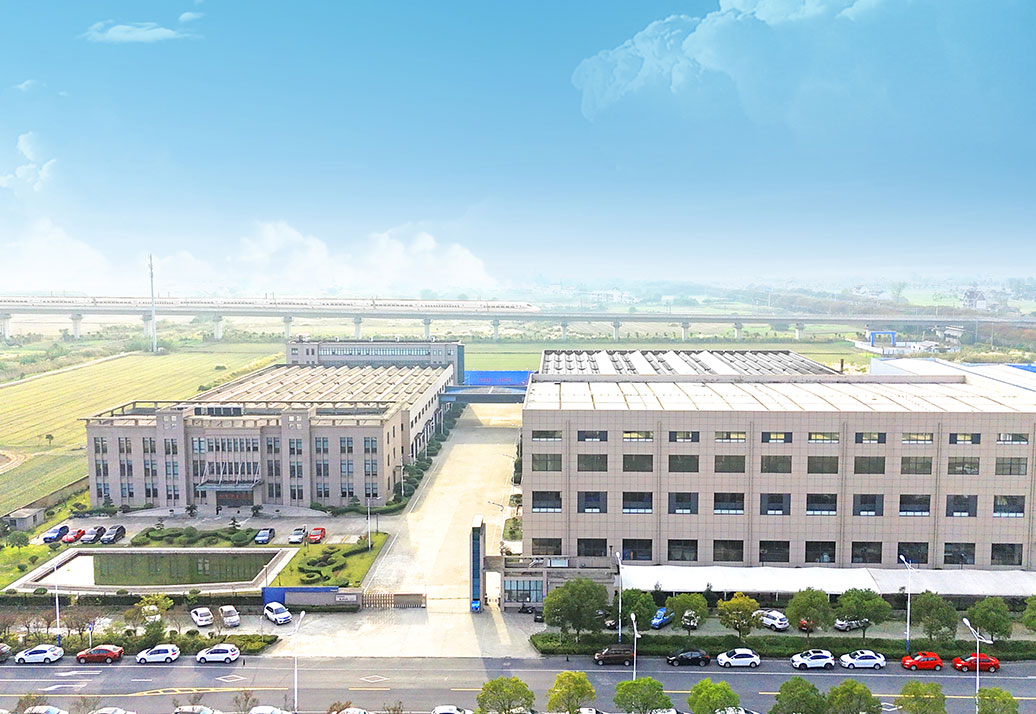
Manufacturing site — facility data should be requested and confirmed, not assumed from a catalogue.
Next Step: Verify a Configuration Against Your Project
Jewel (Nantong Jiabao Machinery Co., Ltd.) manufactures hydraulic baler machines, vertical and horizontal balers, metal balers, briquetting machines, bagging machines, aluminium foil balers and waste compactors, with customization across structure, process and performance, a 60-day lead time and a minimum order quantity of 1 unit.
Download the 2026 Jewel hydraulic baler machine catalogue: open the PDF catalogue
Send your material list, throughput target and destination market to receive a specification-matched quotation.
Website: www.jewelbaler.com
Email: jiabao@csj-baler.com
Tel / WhatsApp: +86 187-2181-4932
Address: No.1 Xinyuan East 1st Road, Rugao City, Jiangsu Province, China
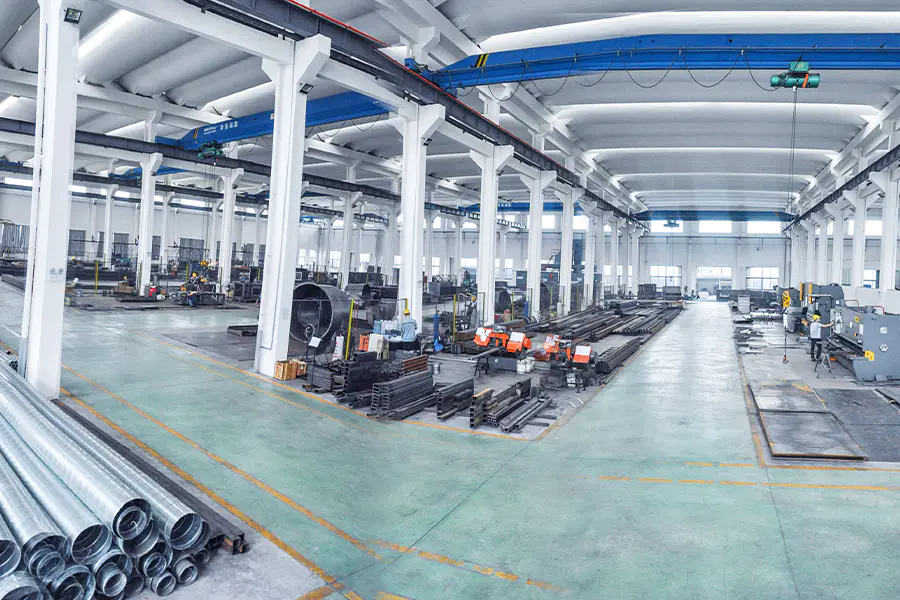
Production line — delivery assurance is a documented commitment, not an assumption.
Have Questions or Need More Details?
Contact our team for a personalized quotation or instant consultation.
Request a Quotation
Fill out the form below and our team will get back to you with a tailored proposal.
WhatsApp Direct Chat
Prefer to chat in real-time? Message us on WhatsApp for instant assistance & quick answers.
- Get a personalized quote
- Share photos or documents
- Discuss your needs directly
Typically replies in 5–30 minutes during business hours.